THE HAPPY SEAL BLOG
Meta settled for $17 billion because its platforms were ALLEGEDLY (KAHM, KAHM:) designed to keep kids hooked.
Što sam stariji to sam sve ubeđeniji da su moderne tech kompanije postale gore od naftaša 1930 godine. Oni su bar imali obraza da vas ne lažu u oči kada vam otmu zemlju.
Danas, u ovo moderno doba ono što rade Meta, Google, TikTok i drugi više nije tužno, sada je već jadno i otužno!
Pre nekoliko dana Meta has reached a proposed settlement with US states over allegations that Facebook and Instagram used addictive features, harmed young users and misled the public about those risks.
Meta admits no wrongdoing. Let me REPEAT that: Meta admits no wrongdoing, but it agreed to pay at least $12.19 billion over 10 years. That number can rise to roughly $17.1 billion if YouTube, TikTok and Snapchat agree to comparable safety measures and financial settlements. And Meta isn’t being subtle about it.
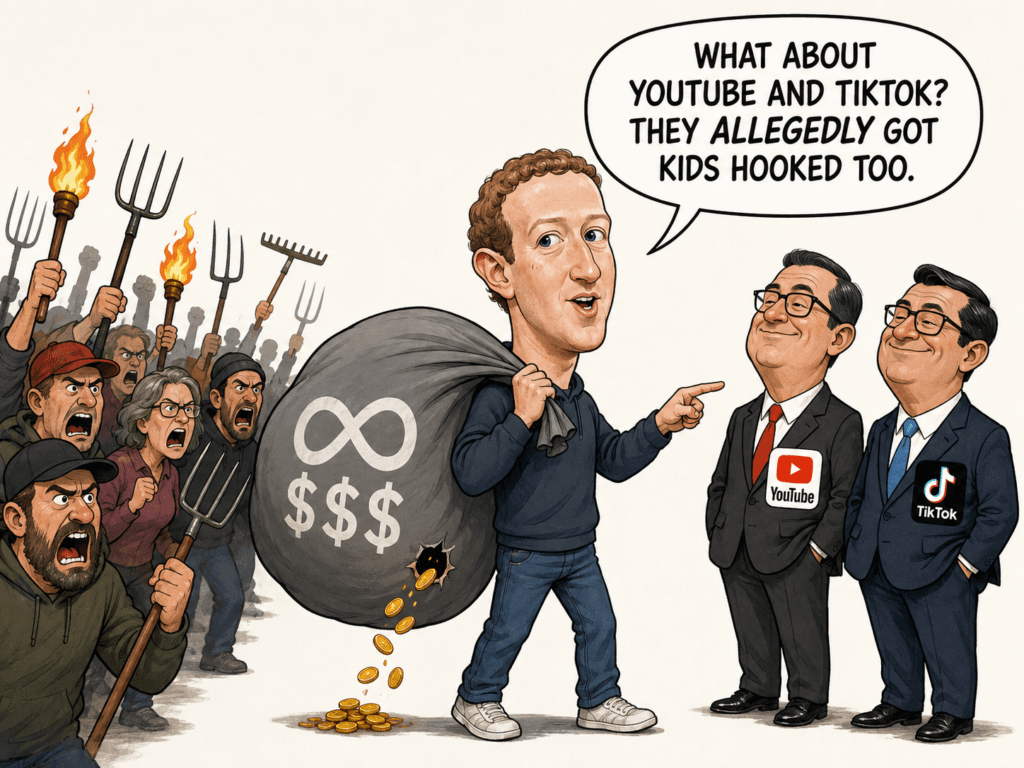
It is running full-page ads asking the public: Hey, what about YouTube and TikTok? They are also hooking kids to their apps…. ALLLEGEDLY of course!
Which creates a fascinating situation:
Meta gets punished — and immediately tries to turn the punishment into an industry standard.
Smart move.
But there is a much bigger question here. Did Big Tech REALLY NOT know what it was doing?
I find that increasingly difficult to believe. These companies can optimize a button color. They can predict what you will watch next.
But somehow, when the conversation turns to protecting children, everything suddenly becomes incredibly complicated.
Seriously?
If AI can optimize engagement and advertising at planetary scale, what exactly is it doing when it comes to protecting kids?
And YouTube should be particularly careful before pretending this conversation has nothing to do with it.
In 2019, Google and YouTube agreed to pay $170 million to settle FTC and New York allegations that YouTube illegally collected children's personal information without parental consent, violating COPPA.
That was seven years ago.
So if the next regulatory wave moves from children's privacy to addictive product design, YouTube cannot exactly say nobody warned them.
The Meta settlement already creates a blueprint regulators can put on the table:
Two-hour daily limits for minors across Facebook and Instagram.
Nighttime restrictions.
No notifications during school hours.
Restrictions on likes and beauty filters.
Age assurance.
Parental controls.
And an option to turn off algorithmic feeds.
Personally, I think Meta should go further. Stop treating child safety as a collection of parental-control features sitting on top of a business model built around maximizing attention.
If you genuinely want to protect children, design the product for children differently by default. And no dark patterns designed to turn five more minutes into another hour.
Because this isn't really a story about companies that didn't understand the consequences of their products; it is a story about what happens when they understand them but the KPI are more important.
There is one more part of this story that worries me. Age verification.
How exactly are we going to prove who a child is?
Governments love control, and it is a small step from protecting minors to “you need digital ID” to access the internet.